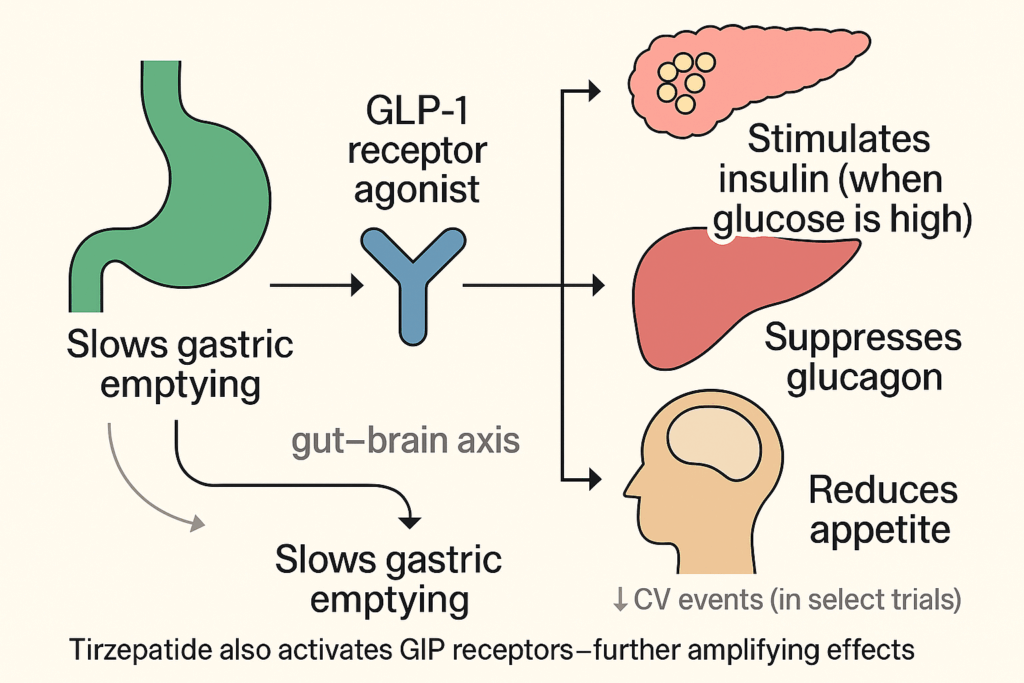
At a glance Retatrutide is a triple-hormone agonist (GLP-1, GIP and glucagon) currently in Phase 3 trials it is not yet approved or available to prescribe The most common side effects are gastrointestinal: nausea, diarrhoea, vomiting and constipation, particularly during dose increases In the Phase 2 trial, up to 16% of participants on the highest dose reported nausea, though most cases were mild to moderate A dose-dependent increase in heart rate was observed, peaking around 24 weeks before levelling off Around 7% of participants reported skin-related sensations like tingling or increased sensitivity No serious safety signals have emerged so far, but long-term data from Phase 3 trials is still being collected How retatrutide works Before getting into the specifics, it helps to understand what retatrutide actually does, because the side effect profile follows directly from its mechanism
Ambas molculas qumicas son producidas por el organismo
It is slow on purpose
Joustra SD, Roelfsema F, van Trotsenburg ASP, Schneider HJ, Kosilek RP, Kroon HM, Logan JG, Butterfield NC, Zhou X, Toufaily C, Bak B, Turgeon MO, Brule E, Steyn FJ, Gurnell M, Koulouri O, Le Tissier P, Fontanaud P, Duncan Bassett JH, Williams GR, Oostdijk W, Wit JM, Pereira AM, Biermasz NR, Bernard DJ, Schoenmakers N